
Surface and Substance
Three highlights from The Art of Adornment exploring how adornment shaped identity across cultures

‘All that glisters is not gold’, Portia warns in The Merchant of Venice. Yet throughout history, appearance and meaning have proved far less easily separated. From Homer’s jewelled descriptions of kings and warriors to nineteenth-century literary fascination with costume and social display, ornament appears as a language through which societies announce power, status and belief. To decorate the body was often to define one’s place within society itself. Three works in particular from Colnaghi London’s current exhibition bring this history into focus. Separated by centuries and continents, they reveal the remarkably varied roles adornment has played.
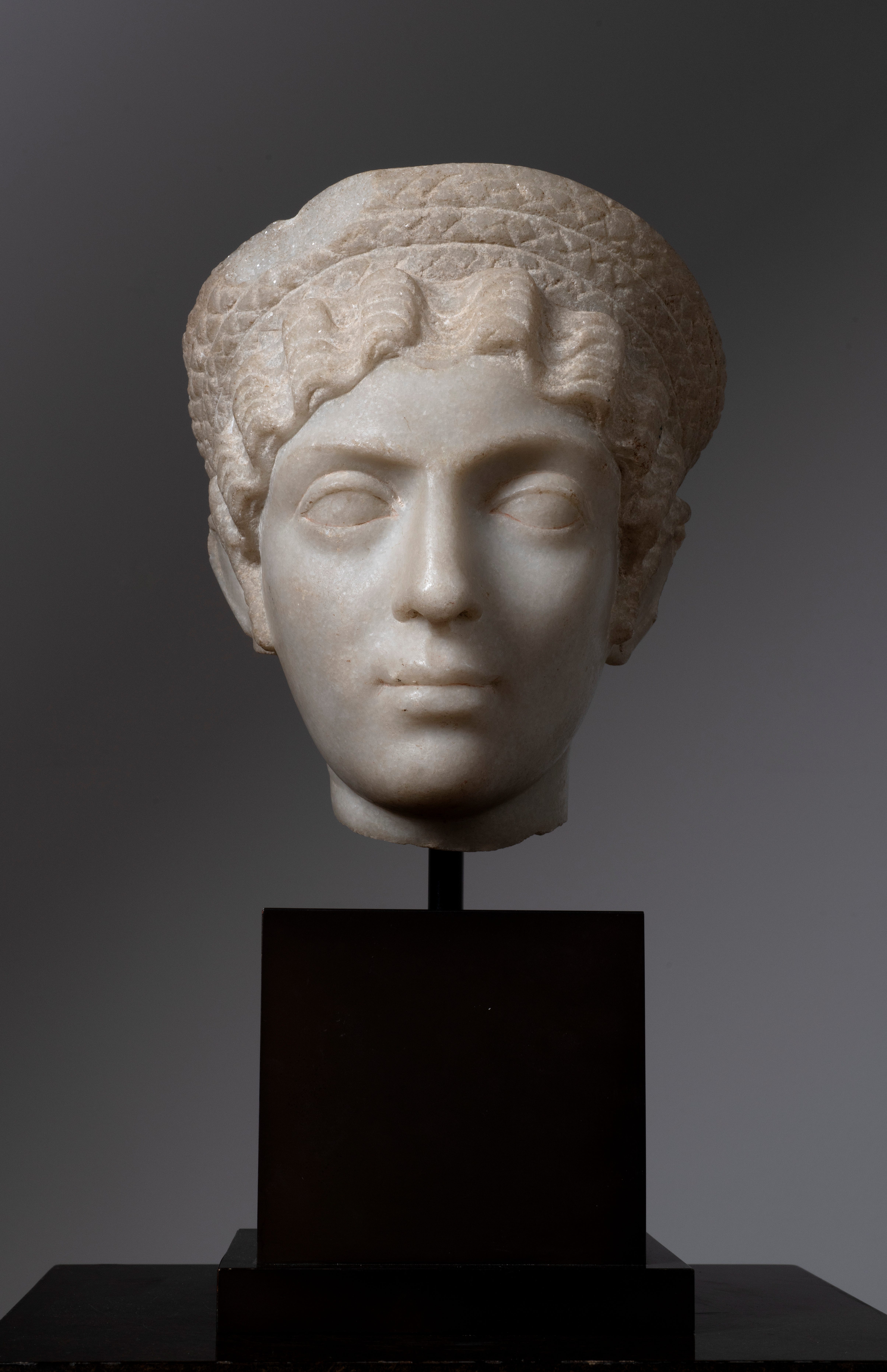
A Marble Portrait Head of a Woman, Roman Imperial, Early Hadrianic period, c. AD 120–130, marble, H. 22.8 cm (9 in.).
Among the exhibition’s most striking antiquities is a marble portrait of a young woman dating to the Hadrianic period. While modern audiences often approach Roman portraiture as an exercise in realism, Roman sculptural traditions pursued something more complex. Portraits functioned not simply as records of appearance but as vehicles through which social position and cultural affiliation could be made visible.
The reign of Hadrian represented one of the most intellectually ambitious moments of the Roman Empire. A passionate admirer of Greek culture, Hadrian initiated a broader programme of classicising revival across architecture, sculpture and imperial imagery. Women of elite Roman society became increasingly implicated within this visual culture. Hairstyles in particular functioned almost as declarations of allegiance to court fashion, disseminating imperial ideals throughout the empire with remarkable speed. The elaborate braided coiffure visible here, arranged in waves of tightly controlled curls and gathered into a plaited turban across the crown, follows styles associated with imperial women such as Sabina, Hadrian’s empress.
Ancient writers frequently describe the extraordinary labour involved in constructing such arrangements. Hairdressers employed curling irons, imported hair and intricate braided structures requiring hours of work. To Roman audiences, these styles signalled education, wealth and social legitimacy. What appears decorative to modern viewers would have functioned as a visible expression of status itself. Even the surviving traces of pigment remind us that Roman sculpture originally existed in vivid colour rather than the monochrome marble surfaces later celebrated by Renaissance classicism.
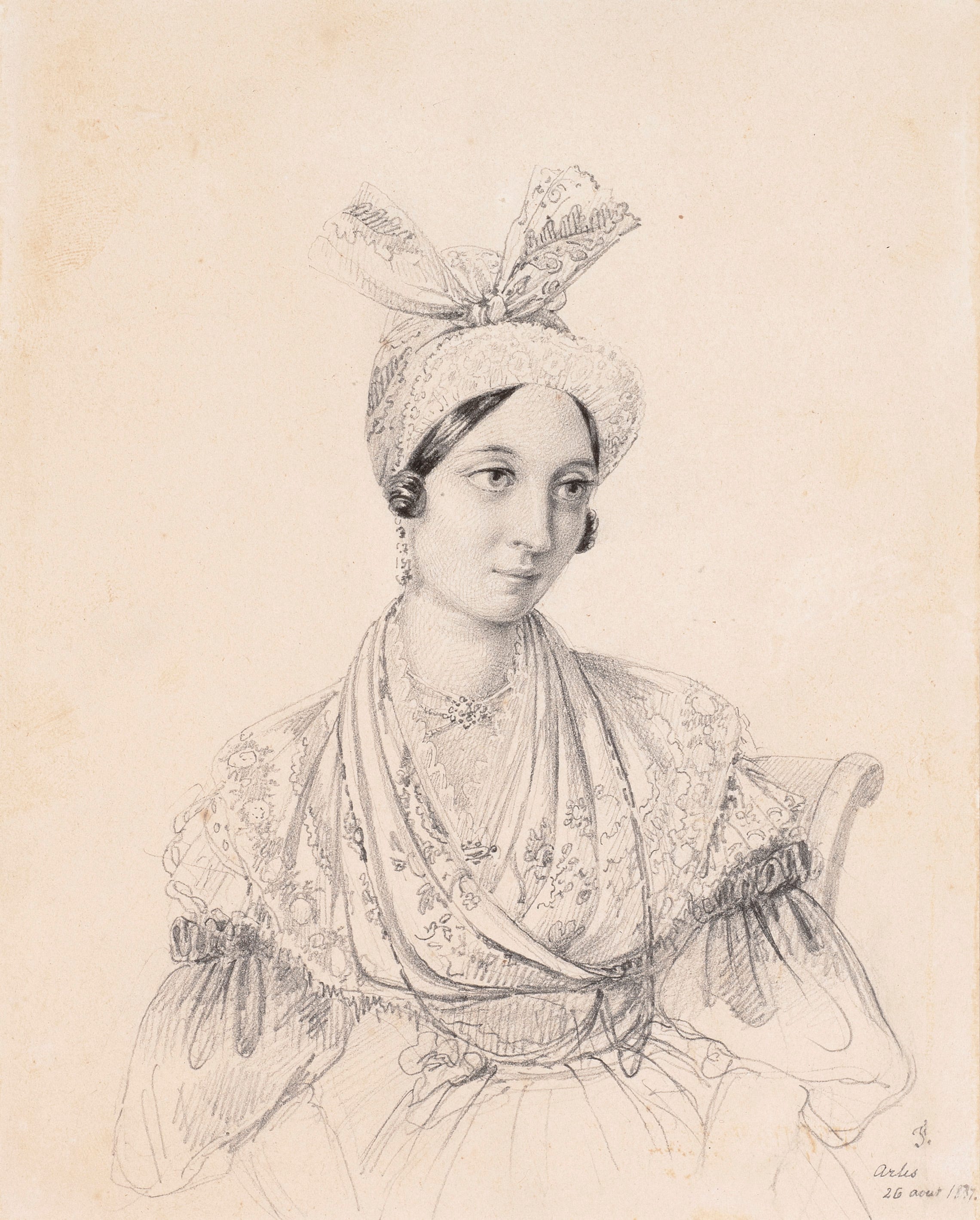
Portrait of a Woman from Arles, Jean-Baptiste Isabey, 1837, pencil on paper, 15.5 × 12.2 cm (6⅛ × 4¾ in.).
By the nineteenth century, adornment increasingly became entangled with ideas of memory and cultural identity. Jean-Baptiste Isabey’s Portrait of a Woman from Arles belongs to a period in which regional costume acquired almost mythological significance within the European imagination.
Across nineteenth-century Europe, industrialisation and political upheaval transformed patterns of everyday life with unprecedented speed. In response, artists and writers increasingly turned toward regional traditions and local customs, treating them as repositories of authenticity at a moment when modernity seemed to threaten older forms of identity. Provence occupied a particularly important position within this imagination. Women from Arles (the celebrated Arlésiennes) became renowned for distinctive dress and repeatedly appeared within literature and visual culture as symbols of elegance and provincial beauty.
Isabey himself occupied an extraordinary position within French artistic life. Trained by Jacques-Louis David and later serving Napoleon’s court, he had spent decades constructing images of aristocratic and political authority. Executed late in his career, the present drawing retains the remarkable delicacy that had defined his earlier work. Fabric, ribbons and ornament dissolve into an intricate network of pencil marks, demonstrating a precision associated with miniature painting.
Yet beyond its technical accomplishment, the portrait reveals something larger about nineteenth-century attitudes toward costume itself. Dress increasingly became understood not merely as clothing but as a visible expression of cultural memory. Ornament here functions less as embellishment than as a way of imagining identity itself.
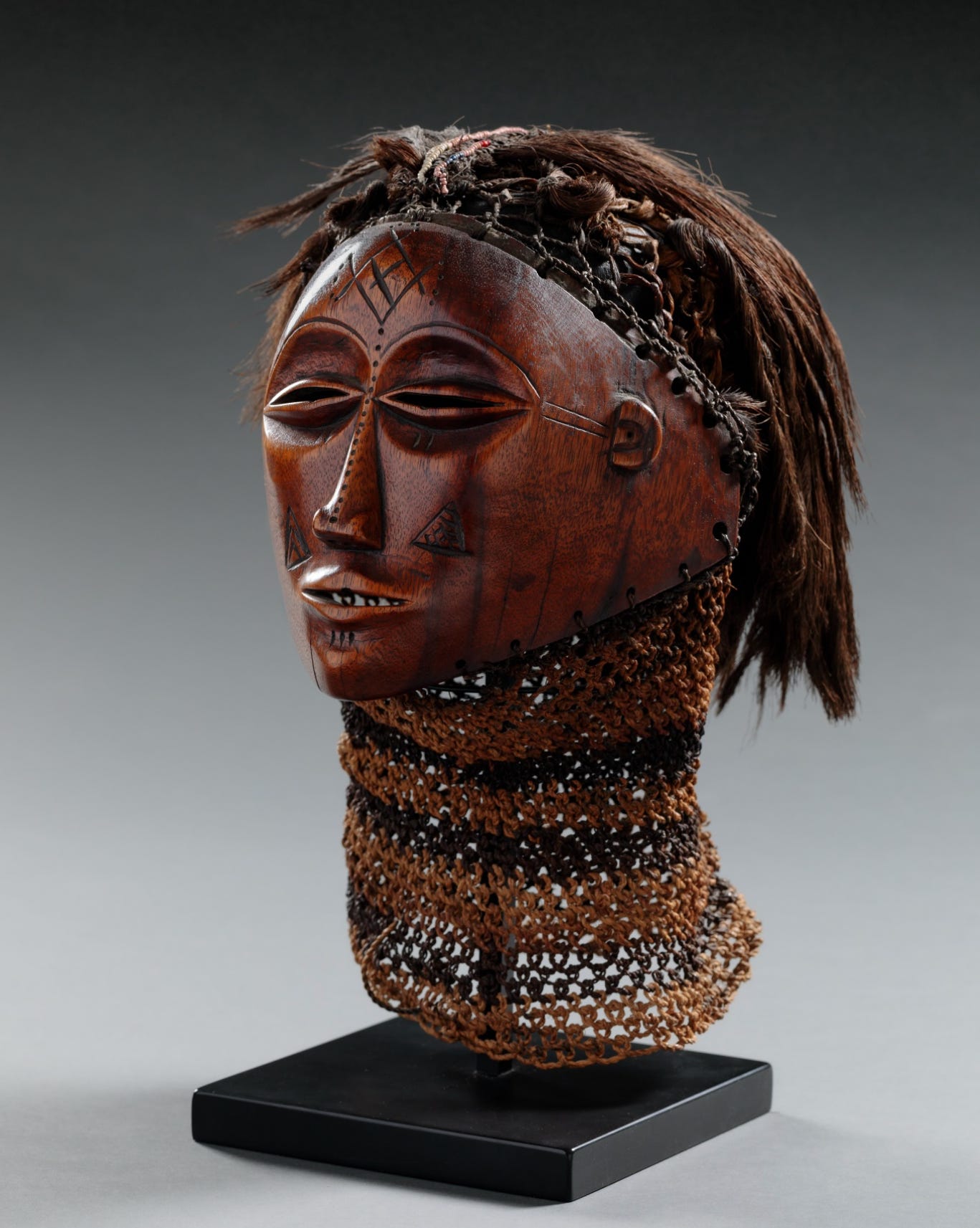
Mask (Pwevo), Lwena artist, Angola, late nineteenth–early twentieth century, wood, fibre and beads, H. 31.2 cm (12¼ in.).
If Roman portraiture transformed the body into an expression of political identity, the Lwena pwevo mask reveals adornment functioning within an entirely different system of meaning. Created in Angola during the late nineteenth or early twentieth century, the work belongs to a much older artistic and ceremonial tradition in which masks occupied a central place within social and spiritual life.
Historically, masks of this kind formed part of elaborate masquerade performances associated with initiation, community ritual and ancestral belief systems. Unlike the European sculptural tradition, where objects often became detached from their original contexts and viewed as autonomous works of art, such masks acquired meaning through movement, music and performance. Their significance emerged through use.
The pwevo specifically represents idealised female beauty, despite historically being worn by male performers. The resulting tension between embodiment and representation reveals a highly sophisticated understanding of identity as something performed rather than fixed. Deeply incised geometric motifs mark the face, while the sculptor preserves the grain and colour of the wood itself. Years of ritual handling have produced the rich patina visible today, creating a surface upon which time itself has become inscribed.
Twentieth-century European artists would later encounter African sculpture and celebrate its formal innovations, particularly its movement between abstraction and observation. Yet objects such as this remind us that these works existed within complex ritual systems long before they entered Western narratives of modernism.
The Art of Adornment remains on view at Colnaghi London until 10 June.
For further information, provenance details, or acquisition enquiries, please contact the gallery.
Old soul, young eye.
Old Masters made modern.
Colnaghi continues to celebrate the dialogue between past and present.
Visit our Website
Read our Latest Journal
Follow us on Instagram