

By the time Leonardo Flores painted Saint John the Evangelist Navigating the Ship of the Church around 1680–90, the image of the Church as a vessel had a long textual history. Horace’s ship odes offered a classical precedent for using a vessel to speak about political order, while Proverbs compared a virtuous woman to a merchant ship “bringing her bread from afar”. Early modern writers and artists gave the Church ship more specific forms. In 1602, Guillaume de Requieu’s engraving brought the Ship of the Church into relation with Noah’s Ark. Bartolomé Leonardo de Argensola’s poem To the Ship of the Church, written in 1634 on the occasion of the victory at Lepanto, cast the vessel as an image of the Church’s triumph. Flores makes Saint John the focus of the allegory, whose concern is the discernment of religious leadership and the defeat of its enemies.
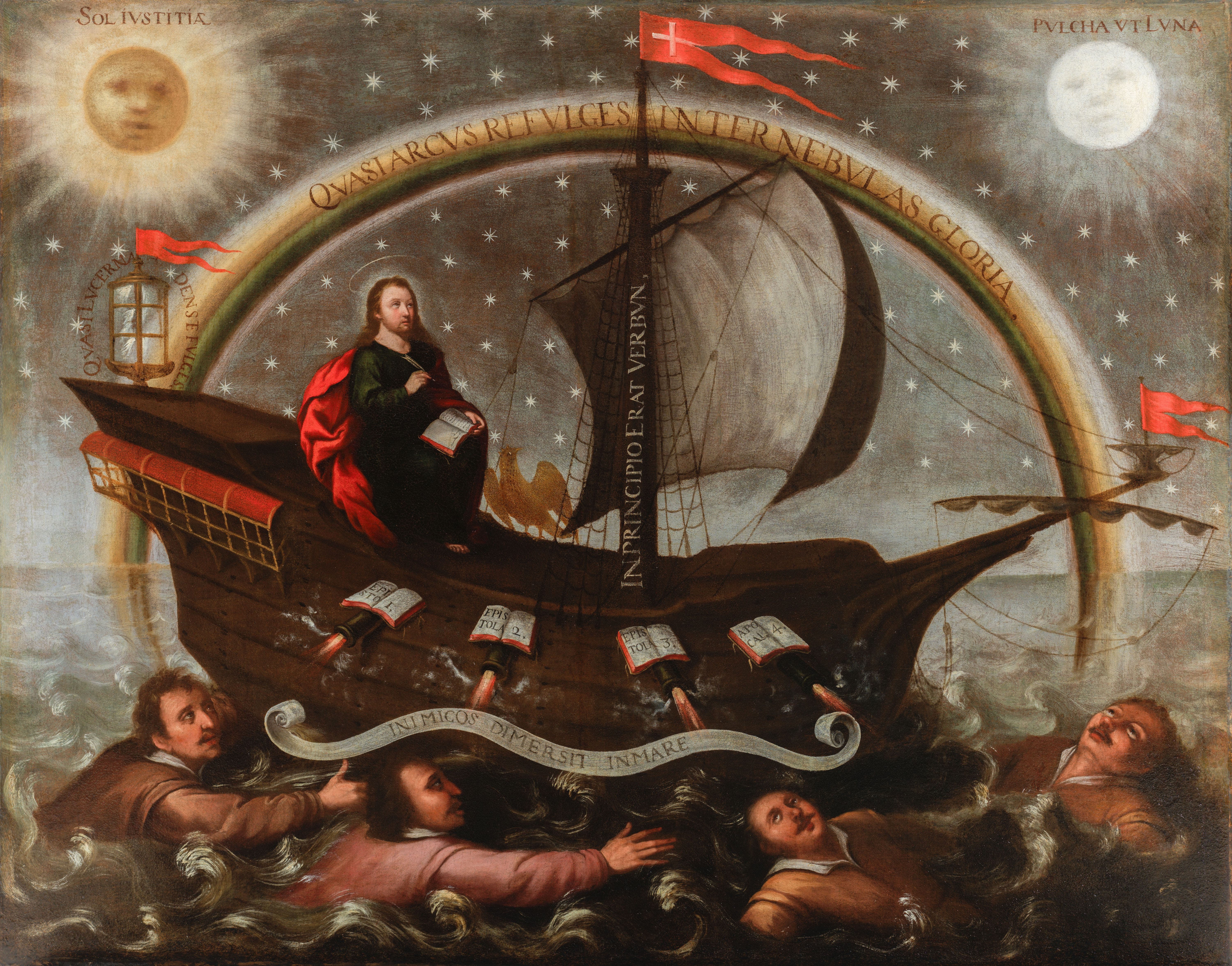
Leonardo Flores, Saint John the Evangelist navigating the Ship of the Church, c. 1680–1690, oil on canvas, 158 × 200 cm (62¼ × 78¾ in.).
The Latin texts refer to the Gospel of Saint John, the Epistles and the Book of Revelation. The ship’s gunports take the form of books, while a scroll beneath them bears the words Inimicos demersit in mare, “He cast his enemies into the sea”, from the Book of Exodus. Together, these details present the vessel as an image of the Church defending religious orthodoxy. The rainbow above the ship, known as k’uychi in Quechua, held significance in Inca culture and remained an important motif in Andean painting after the Spanish conquest. Flores’s composition brings this visual tradition into contact with a theological allegory shaped by European texts.
The painting is by Leonardo Flores, one of the artists associated with the emergence of the school of La Paz in the second half of the seventeenth century. La Paz lay between Potosí, a centre of the Spanish American mining economy, and Cuzco, the former Inca capital. Flores’s large-scale compositions and treatment of figures connect this work with his paintings for the Church of San Francisco in La Paz.
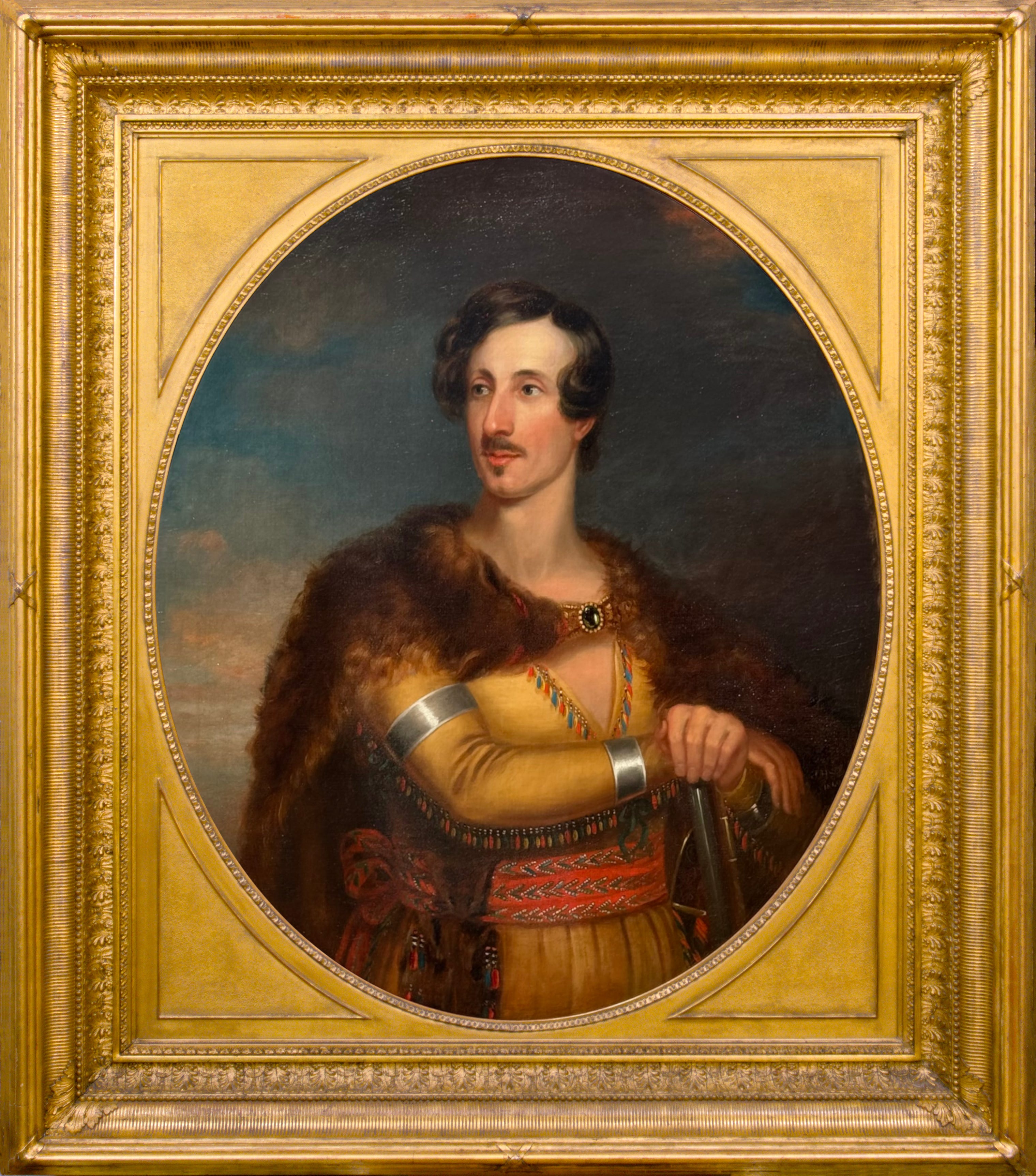
James Hamilton Shegogue (1806–1872), Portrait of Edward Seguin, 1840, oil on canvas, 99 × 84 cm (39 × 33 in.) unframed, 129.5 × 114.5 cm (51 × 45 in.) framed.
James Hamilton Shegogue’s Portrait of Edward Seguin, painted in 1840, records a title conferred on its sitter by the Wendat at Jeune-Lorette, near Quebec. Seguin was an English bass who had arrived in New York with his wife, the soprano Ann Childe, in 1838. On 19 August 1840, he was adopted as an honorary chief of the Huron-Wendat Nation and given the name Wach-n-wachn, “the Great Diver”, in reference to his voice. The adoption recalled the kindness shown by Seguin and his father to Wendat chiefs during their 1825 visit to London.
The portrait’s rendering of Seguin’s hide tunic, mantle and ornaments records the clothing associated with his adoption. Shegogue presents Seguin in a conventional half-length portrait, leaving the clothing to register the title bestowed on him. The work was exhibited at the National Academy of Design in 1841.
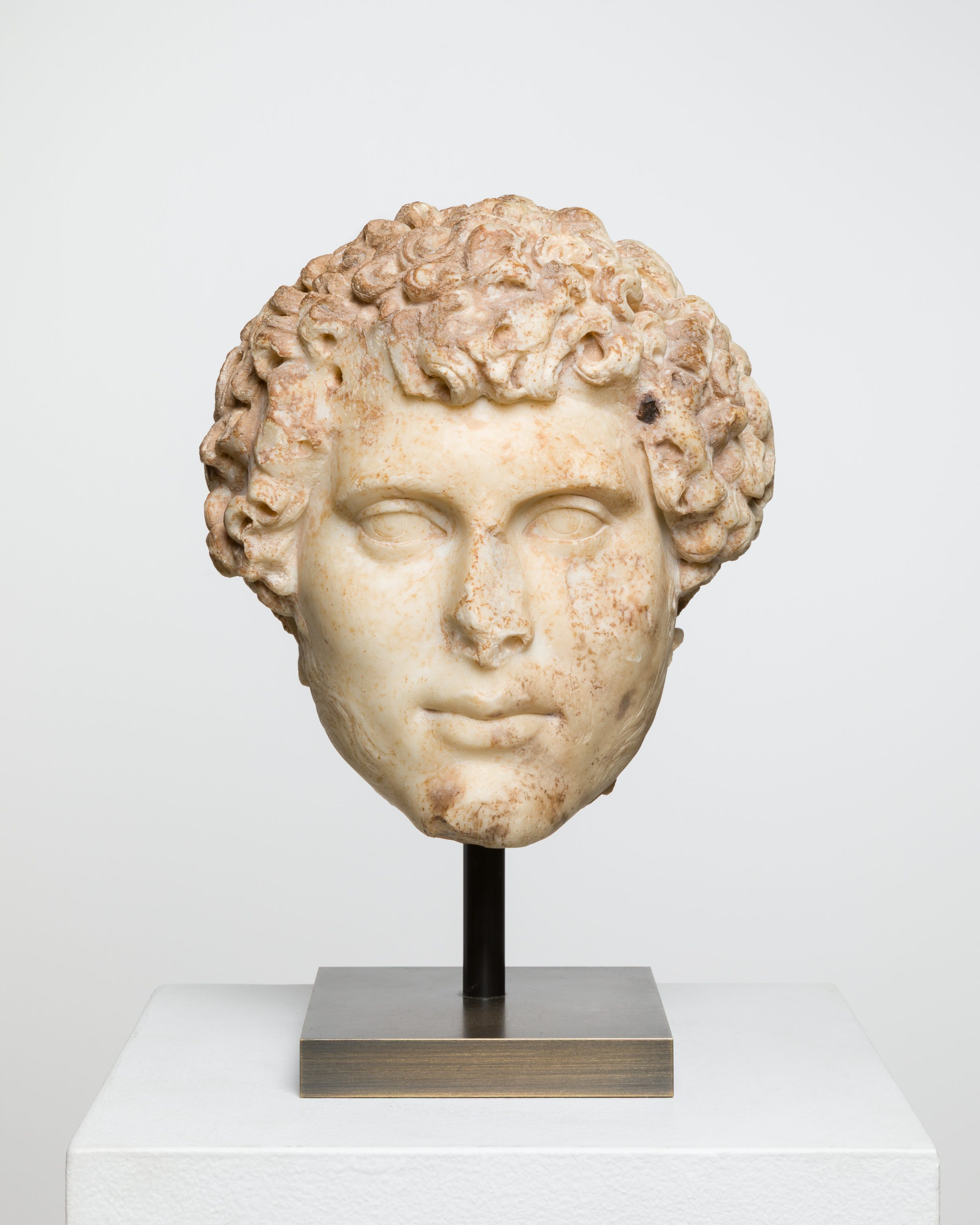
Roman, Imperial period, mid-2nd century A.D., Head of a Young Man, marble, h. 23 cm (9⅛ in.).
The marble Head of a Young Man, made in the middle of the second century A.D., reflects a change in Roman portraiture associated with Hadrian. His public image, with its beard and longer hair, established a model followed by later emperors of the Antonine period. The young man’s coiffure and features have parallels in portraits modelled on Lucius Verus and Marcus Aurelius, though he has not been identified as either. The curls at the crown, beard and moustache remain particularly well preserved. The marble’s warm brownish colour is the result of burial.
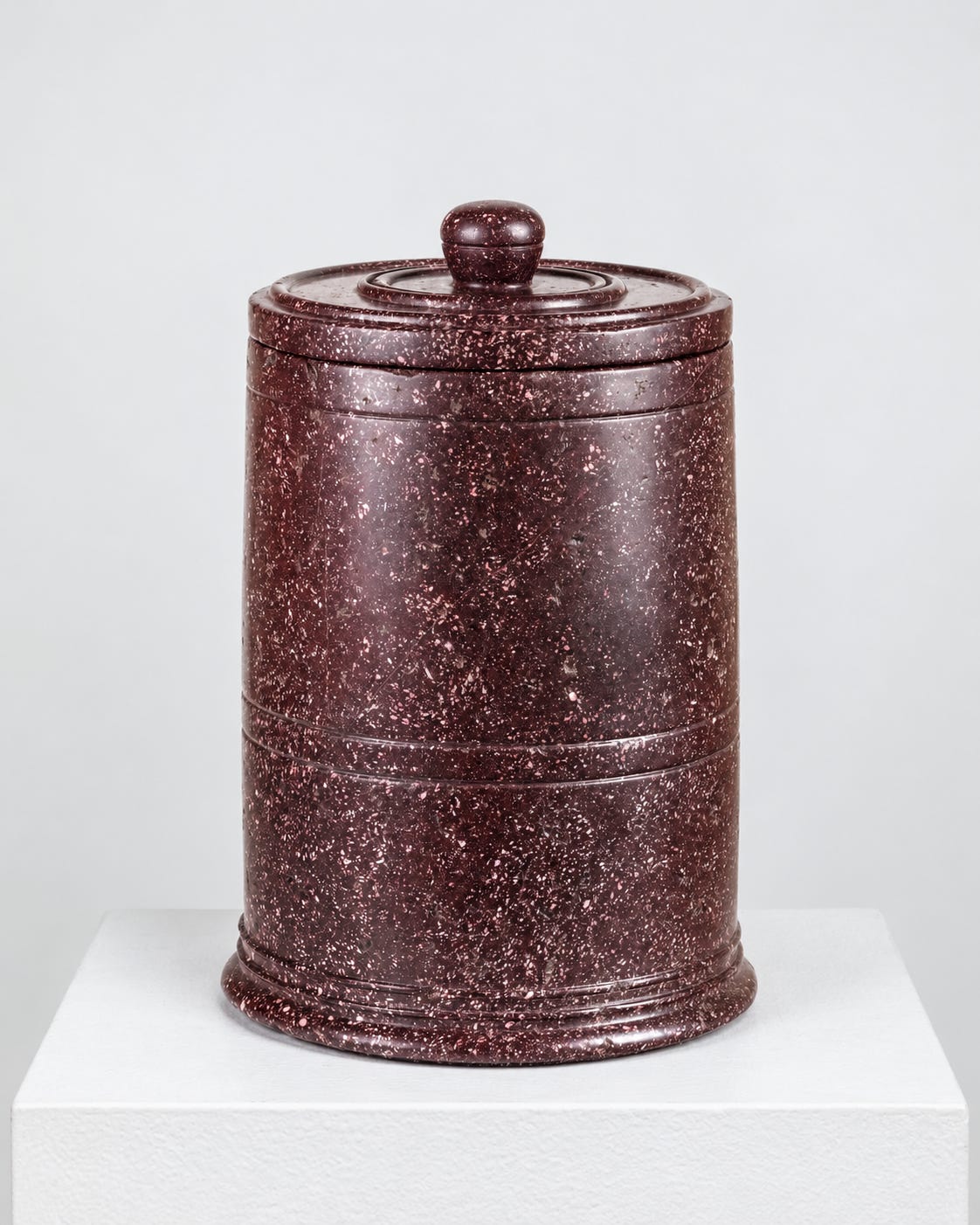
Roman, Imperial period, Lidded Cista, Egyptian porphyry, 30 × 19.5 × 19.5 cm (11¾ × 7¾ × 7¾ in.).
The Lidded Cista is carved from Egyptian porphyry, a material associated with Roman imperial power. Its principal source was Mons Porphyrites in Egypt, where extraction was controlled under Ptolemaic and Roman rule. The stone’s hardness made quarrying and transport difficult, and its use was consequently limited. This vessel may have held cremated remains; its surviving lid is unusual among comparable examples. Cassius Dio records that after Septimius Severus died at York in 211, his cremated remains were placed in a porphyry vessel for transport to Rome. Traces of a Florence Biennale inventory sticker on the lid show that the cista was at the fair before 1985.
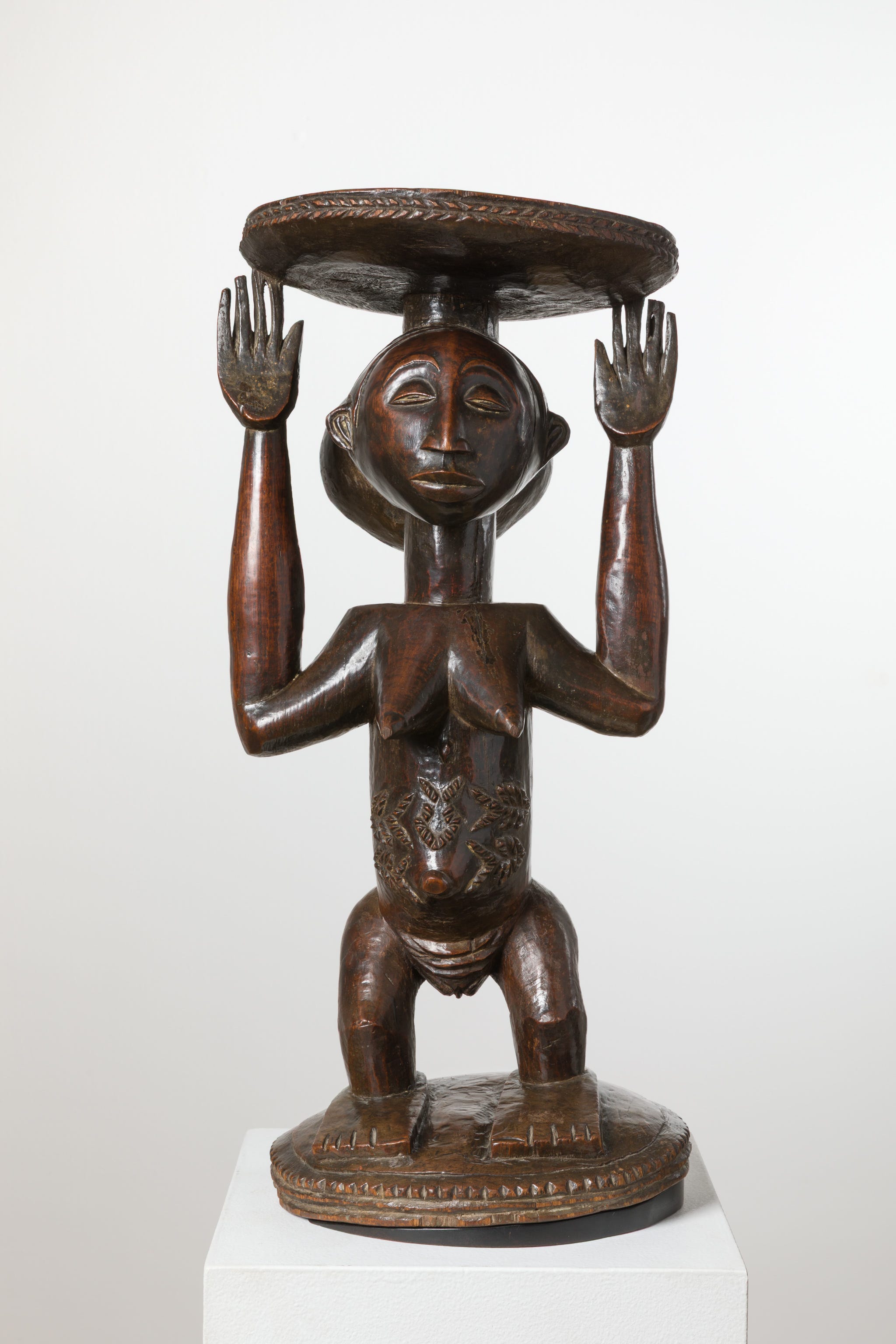
Hemba artist, Prestige Caryatid Stool, lupona, Democratic Republic of the Congo, late 19th–early 20th century, wood, h. 57.2 cm (22½ in.).
The Hemba prestige stool belongs to a tradition in which seating marked rank and chiefly office. Its seat rests on the head and raised hands of a female figure, understood within Hemba practice as a representation of female ancestry. This relates to the importance of women in the transmission of succession and inheritance through the female line. The stool was exhibited at the Jacques Seligmann Gallery in New York in 1936 and at the M. H. de Young Memorial Museum in San Francisco in 1948.
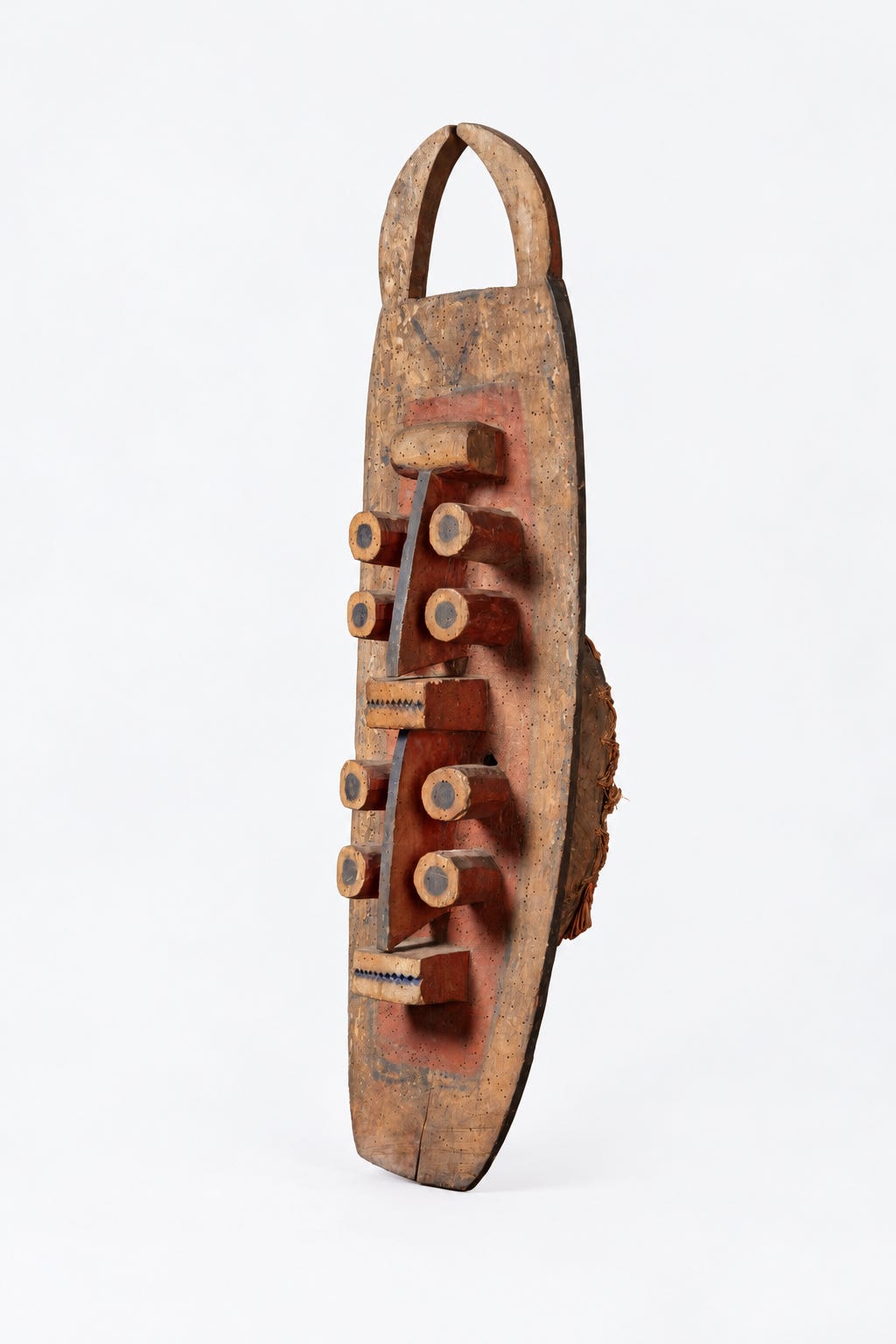
Grebo artist, Mask, Ivory Coast, late 19th–early 20th century, wood and pigments, 88.9 × 23.8 × 18.4 cm (35 × 9⅜ × 7¼ in.).
A Grebo mask from Côte d’Ivoire also has a history of exhibition and publication. It was shown in Paris in 1955 in Les arts africains, later appeared in Ladislas Segy’s African Sculpture Speaks, and was included in the Los Angeles County Museum of Art’s 2017 exhibition The Inner Eye: Vision and Transcendence in African Art. These records trace the mask’s place in successive presentations and studies of African art.
Colnaghi New York will present these works with Carlo Bella at Salon Art + Design, Stand A14, with the stand furnished by Studio Valle de Valle.
Old soul, young eye.
Old Masters made modern.
Colnaghi continues to celebrate the dialogue between past and present.
Visit our Website
Read our Latest Journal
Follow us on Instagram